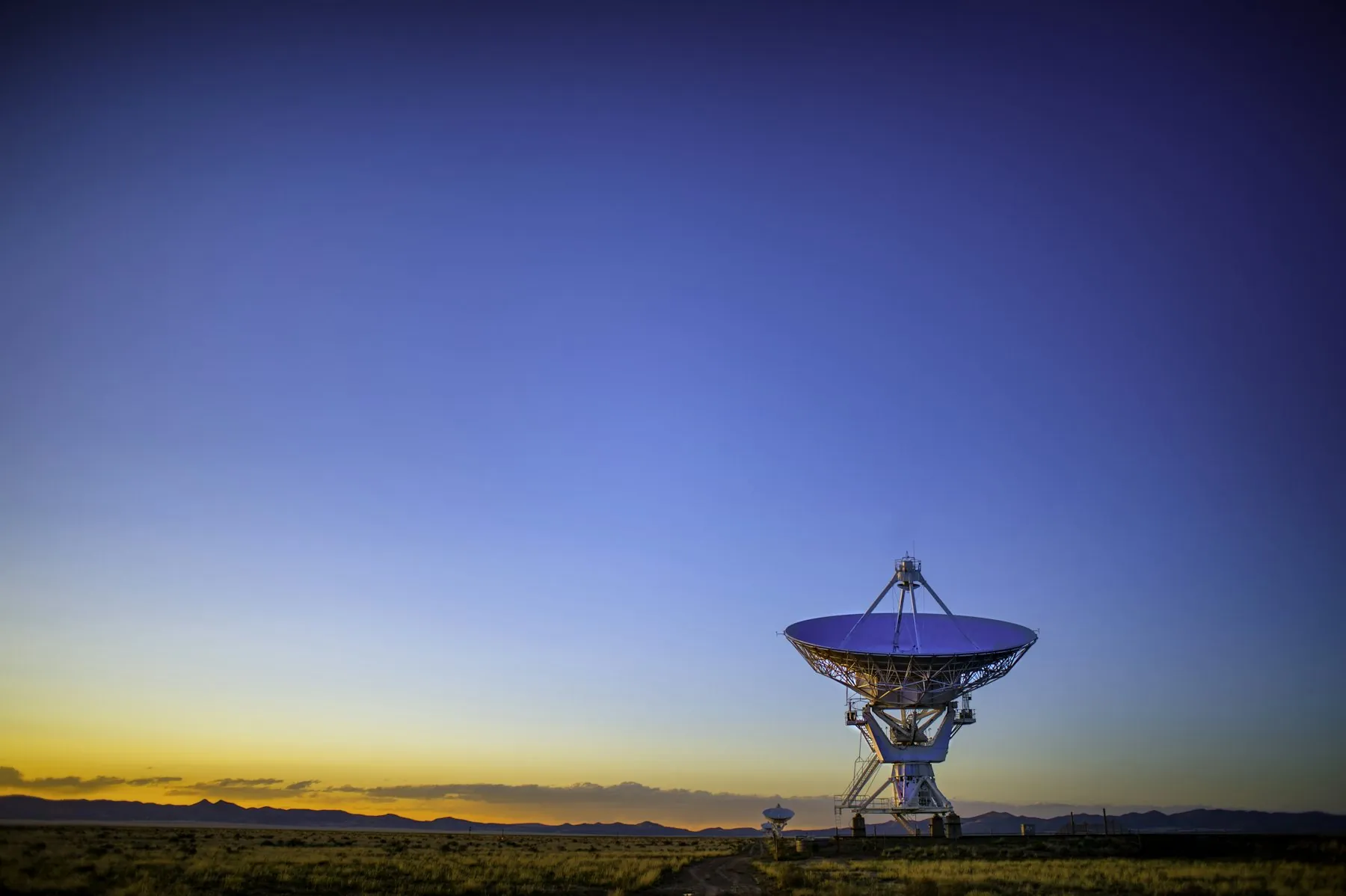
For ground station operators
Higher latitude. More Contacts. Reduced costs
For TT&C and downlink from polar satellites, Iceland's high latitude means ground stations see more passes of longer duration. That means you need fewer ground stations. In a world where satellite operators pay per minute, this increases your revenues and reduces your costs.
- Passes per day
- ~10-11
SSO, 700km, 5° mask - Contact time per day
- ~100 minutes
SSO, 700km, 5° mask - Build from agreed drawing
- 8 weeks
- Contract pack
- 5 documents
Icelandic law
The Bandwidth Bottleneck
By October 2026, there were over 16,500 satellites are now active, some 4,700 of them in polar or sun-synchronous orbits. That population is growing around 20% a year, but ground-station capacity has not kept pace. The result is a bandwidth bottleneck and rising demand for high-latitude ground stations.
Benefits for Ground Station Operators
Iceland gives ground station and GSaaS operators a number of advantages for talking to satellites in SSO and polar orbits.
| More Contacts per Day | For mid-LEO satellites, ground stations in Iceland can expect to see 2-3X more passes per day than mid-latitude sites. |
|---|---|
| More Contact Minutes | Averaging around 7.5 minutes between ACQ and LOS for a satellite in a 550km SSO, a ground station on our park can expect 75 minutes of contact time per day with a 5° mask. |
| Internet Backhaul | Four redundant submarine cables link Iceland to Europe and North America. Together they carry 167Tbps, including a direct route with 15ms latency to Europe's cloud capital in Dublin. |
| Cheap Clean Energy | Iceland's hydroelectric and geothermal power stations give you clean power at 45% of the European average cost. |
| Shallow atmosphere | The troposphere is only 8-9km at Arctic latitudes, compared with 18km at the equator. This reduces atmospheric losses at higher frequencies. |
| Dry atmosphere | Cool air holds less water vapour which mitigates the effect of rain fade on your link budget for Ka band and above. |
| Efficient Regulatory Regime | In Iceland, ground stations are regulated under EU telecoms law. This lightweight regime is extremely cost-effective and means it is possible to obtain a license from Fjarskiptastofa in weeks not months. |
What the site is set up for
You own and operate the antenna. We look after everything else.
Pads built to your specification
The park is zoned for light industrial use meaning no additional approved is needed for antennae up to 12m in height. Each antenna gets a pad engineered to your structural drawing by an Icelandic consultant and signed off before it is poured.
Power and fibre to the pad
Delivered against an agreed monthly consumption set in the technical schedule, with the connection envelope confirmed in writing with the utility before it is committed.
A build measured in weeks
Grid power and fibre are already connected at Blönduós. Ground preparation, the pad, on-site distribution and, most importantly, licensing can be done in eight weeks from an agreed structural drawing. The sequence, week by week.
Segregated compound space
Access-controlled or physically separated space is available when needed. It changes the land utilisation and therefore the price, which is why it is better raised in the first conversation than the fifth.
Smart Hands under your direction
One to eight hour response by service period. Inspection, power cycling, component swaps, cabling, clearing snow and ice — under the real-time direction of your engineers, never on our own judgement.
Contracts ready to go
Either the normal Master Service Agreement with schedules for your specific needs or a lightweight agreement for small installations needing only power and internet. Icelandic governing law. What is in the contract pack?
One thing to think about early: Icelandic is windy. Gusts can be severe enough to cause problems for unprotected antennae. Fortunately many standard radomes provide adequate protection. Details of wind extremes are here.
Coverage and commercials
The two things that decide most of these conversations.
About eleven passes and 100 contact minutes a day
For a satellite in SSO at 700 km with a 5° elevation mask you can expect 11 passes and 100 contact minutes a day. That is roughly 2.3× the number of passes seen by a mid-latitude station. The number of contact minutes per day is within 8% of Tromsø, 5% of Esrange and about 70% of Svalbard. A comparison is available here →
Fixed inclusive monthly fee + a one-off activation fee
A single inclusive monthly hosting fee fixed for the duration of your contract. No per-pass or per-gigabyte component — we realise you are a space company not a real estate company. Tell us the antenna size, type and mass, power and bandwidth requirements and whether you need segregated space and we can give you an indicative price in the first reply, before any call. What is in the fee and what is not →
The gap, and what it is worth
Why a node here does something a fourth Scandinavian node does not.
Geographic fill
Iceland sits in the one ocean basin where distributed ground networks are thinnest. A site at 65.65°N here is the mirror of a 65°N Alaskan site on the other side of the North Atlantic, and it is 20° to 40° west of the Nordic sites — so it changes the orbital geometry rather than duplicating it.
Latitude without capital
You put your own hardware on it and keep operating it. No land purchase, no planning process, no civil contractor to manage, and no capital tied up in a jurisdiction you do not otherwise operate in.
Power and backhaul for real volume
A grid that is roughly 70% hydro and 30% geothermal, and four submarine cables with a total capacity of 167 Tbps.
Something you can resell
If any of your traffic is government or dual-use, your customers' programme offices will eventually raise the jurisdiction of your ground segment. Iceland gives you an answer to that — the detail is here if it is relevant to your book, and safely ignorable if it is not.
Before you ask
Some FAQs.
We are not Svalbard
Depending on satellite altitude and dish size, the Blönduós site can deliver about eleven passes and 100 contact minutes a day against fifteen and 141 at Svalbard — roughly 70%. If pass count and contact duration are your only criteria, Svalbard will always win. But if you are worried about ease of maintenance to hit your SLAs, vulnerability to interference with submarine cables or latency to major cloud-computing centres like Dublin, you may want to consider Iceland. More details →
How extreme is the weather?
Iceland might be easier to get to than most high-latitude Arctic locations and it is warmer than you might think, but it can be windy! Over the last five years, the highest gust of wind was measured at 39m/s. This may be prohibitive for some radio dishes on their own but is well within the design capabilities of many commercial radomes. This is not necessarily a reason to look elsewhere but it is something to consider. Here are some statistics.
Is Iceland Part of the EU?
Iceland is not in the EU but is in the European Economic Area (EEA). Through the EEA Agreement, it takes part in the EU single market and adopts most EU rules on goods, services, capital, people, competition, state aid and data protection, including the GDPR. EU and Icelandic companies can therefore trade, invest, hire and move data across the border much as within the EU. Iceland is also outside the euro with its own customs, tariffs and currency.
Is Iceland part of NATO?
Iceland is part of NATO and has a first class airport and fibre-optic internet infrastructure partly as a legacy of the cold war. Iceland is the only NATO member with no standing armed forces so there is no national military space programme with a prior claim on capacity at our sites.
Next step
Start with an engineering call.
Your ground segment lead and ours, thirty minutes, before anyone writes a proposal. Tell us your antenna size and type, what frequency bands you want to use, how much power and bandwidth you need and whether you anticipate needing on site support and we will tell you whether that makes sense on our site and give a broad indication of monthly fees.