For SSA and SDA
Higher revisit rate. Shorter observation gaps. Better orbit determination.
Whether your space situational or domain awareness (SSA/SDA) is optical or radar, hosting your equipment at high latitude in Iceland means you see targets more often and detect on-orbit manoeuvres more quickly. This results in more accurate orbit determination.
- SSO and polar revisit rate
- ~10 a day
- Clear darkness hours
- ~12%, against 4.5% at Svalbard
- Inclinations in view
- SSO, polar, 52–53° and 70°
- Two-site cloud cover
- Almost uncorrelated
Benefits of Iceland for Space Situational Awareness
Having Iceland in your network of SSA telescopes gives high revisit rates and often widens the spacing between installations leading to higher accuracy.
This in turn means shorter observation gaps and reduced manoeuvre detection latency. You spot orbital changes faster and can deliver better data to your customers.
Optical SSA
No two ways about it. Iceland is never going to have the clear skies of Mauna Kea or the Atacama desert. But if you are doing SSA/SDA though, it has a number of advantages.
| Well placed for busiest orbits | Iceland sees satellites in sun-synchronous (SSO) and polar orbits about 10X a day. Unlike Svalbard it can also see the satellite constellations (Starlink, Kuiper) crowding the 52-53° and 70° inclinations. |
|---|---|
| More clear night sky | At Keflavik, roughly 12% of the hours of darkness are clear compared with only 4.5% in Svalbard. About 52 nights a year with at least one clear dark hour, against SvalSat's 18. |
| More twilight hours | At twilight, satellites in low earth orbit are sunlit against a darkening sky so the long periods of twilight found at high latitudes are ideal for SSA. Unlike Svalbard, Iceland has some twilight even in high summer. |
| Plug gaps in tracking networks | Sitting in the North Atlantic between Europe and North America, Iceland adds viewing angles and longitude coverage that sensors further south lack. |
| Low cost operations | Cheap power and high capacity internet backhaul mean low opex for automated telescopes. |
If you are worried about cloud cover, consider putting two telescopes in Iceland. Cloud cover at our northern and southern sites is almost completely uncorrelated. We'll even offer you a package deal.
Radar SSA
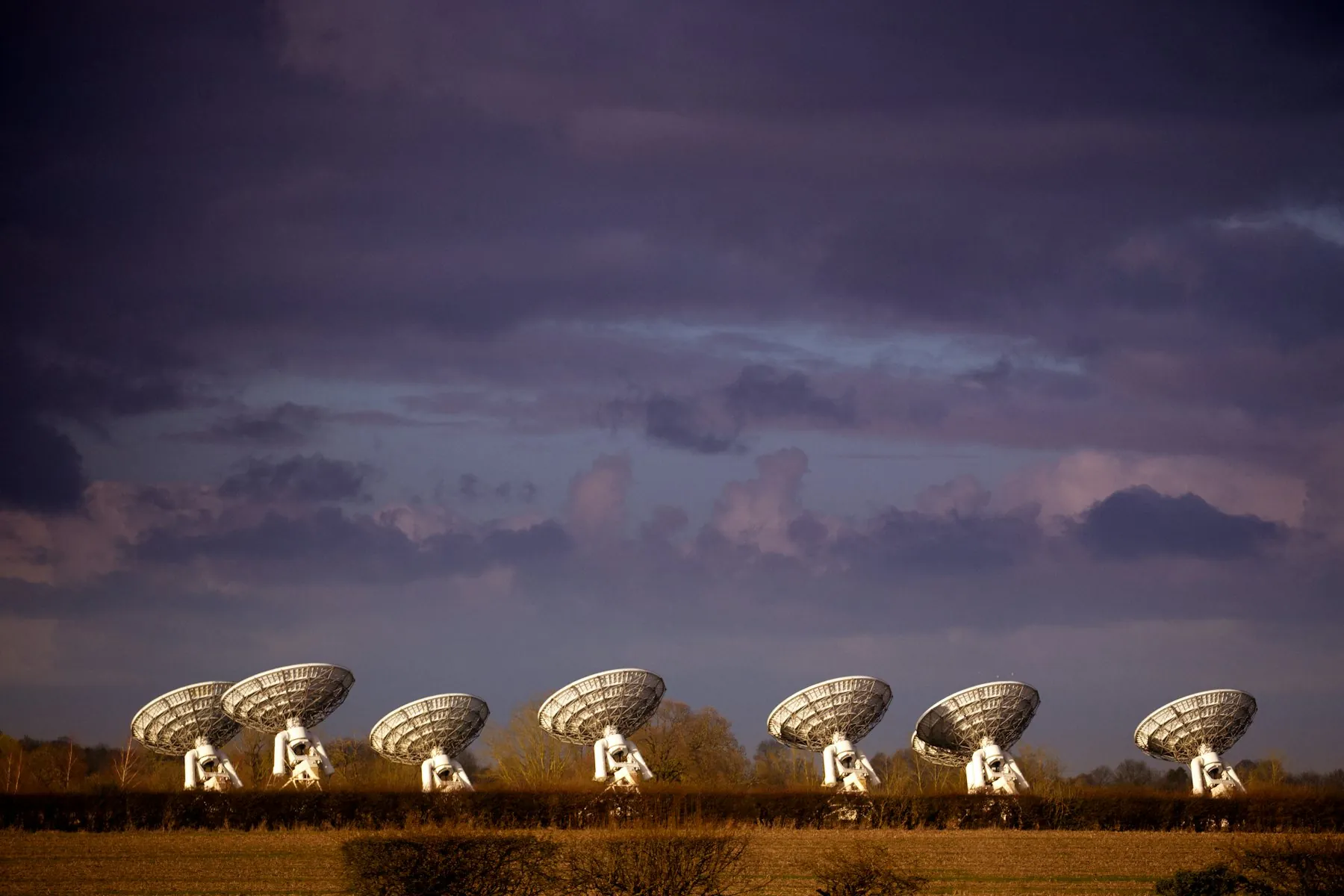
Iceland's high latitude makes it the perfect spot to track objects in SSO and polar orbits. All of these are in low orbits and relatively close - 400km rather than 36,000km. Radar is a great tool for this as it gives direct range and velocity measurements all-weather 24/7 operations and, for low Earth orbit (LEO), you don't have to worry about 1/R4 signal attenuation.
| Well placed for busiest orbits | Just as for optical SSA, Iceland sees satellites in SSO and polar orbits about 10X a day. It also sees satellite constellations (Starlink, Kuiper) in the commercially crowded orbits at inclinations of 52-53° and 70°. |
|---|---|
| Plug gaps in tracking networks | Sitting in the North Atlantic between Europe and North America, Iceland adds viewing angles and longitude coverage that sensors further south lack. It watches passes over the North Atlantic and the northern approaches to the Arctic, which no mainland site on either continent covers as directly. |
| 'Flight Heritage' | Iceland has a long history of operating radar sites for NATO and the Iceland Air Defence System and is also outside the Svalbard Treaty making it ideal for SDA. |
| Internet Backhaul | With so many active and inactive satellites, payloads and debris in LEO, you are going to be generating a lot of data. Iceland's on-shore fibre network and high capacity internet backhaul to Europe and North America mean you can get this data to your customers. |
| Local Processing | For historical reasons, Iceland has a number of data centres and significant HPC expertise. If you would prefer to process your data in Iceland before sending results to customers, this is straightforward. |
| Low cost operations | Cheap clean energy from renewable hydroelectric and geothermal sources make Iceland one of the cheapest places to run high power radar installations. |
| Land Availability | If you're going to operate radar SDA, you need a large area of flat, stable land away from population centres yet with access to power and fibre. Iceland's large basalt plains, fibre ring, renewable power and sparsely populated coastal plains are ideal for this. |
Coverage and commercials
Just as for ground stations, the two factors that decide whether this is worth a technical call are usually coverage and fee structure.
High revisit rate
Historically, SSO and polar orbits were the most crowded. Until Starlink, they held 60-75% of active satellites in LEO. This means that there is an enormous amount of debris and decommissioned payloads still in these orbits. To track them accurately, you need a high latitude site like Iceland.
Fixed inclusive monthly fee + a one-off activation fee
A single inclusive monthly hosting fee fixed for the duration of your contract. No per-pass or per-gigabyte component — we realise you are a space company not a real estate company. What is in the fee and what is not →
Next step
Get an idea of what is possible.
For optical, tell us the size of your telescopes and your power and bandwidth needs and we'll give you indicative pricing. For larger radar installations, arrange to meet with us and we can tell you what is possible.